
Forward:
This is the first and only English translation of the Arabic article “الزهرة التى قدسها الفراعنة” (“The Flower that the Pharaohs Sanctified”), written by the late Abdul-Monem Abdul-Azim, a passionate researcher of Egyptian culture and former director of the Center for the Heritage of Upper Egypt in Luxor.
Originally published in 2008, this article offers a detailed (non-biased) exploration into the impact white (Nymphaea lotus), blue (Nymphaea nouchali var. caerulea), and sacred lotus (Nelumbo nucifera) had on ancient Egyptian civilization and briefly delves into the impact the flower had in many other regions. The blue lotus and other lotus flowers were not just found in Egypt.
Introduction: The Lotus and Egypt
Although the lotus flower was known in many countries of the ancient world, such as India, China, and Greece, its association with Egypt was more than those countries that witnessed the cradle of human civilizations and had an impact on many aspects of life in ancient Egypt.
The Three Famous Egyptian Lotuses
The lotus flower has many types, of which eight are famous, and known to the Greeks and Romans as lotus. In Egypt three lotus flowers were the most famous.
The Three Famous Egyptian Lotuses
1. The White Lotus (Seshen)
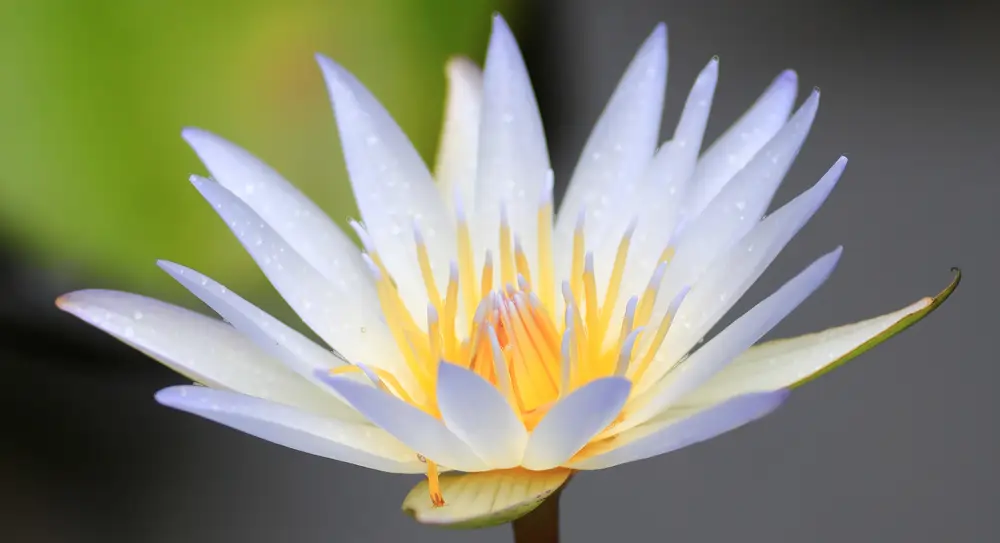
“The first of these is the white lotus plant (Nymphaea lotus). The ancient Egyptians called it seshen and sesen. From this name the Arabic names al-sawsan (the iris/lily) and al-suzan (Susan) were derived. It was also known as beshnīn al-khinzīr (the pig’s beshnīn) or ʿarāʾis al-Nīl (the brides of the Nile).” In addition to the use of white lotus flowers in decoration, they were used as a moisturizer, and the Egyptians were eating their roots, roasted and boiled, and Herodotus mentions that they were grinding its seeds after collecting and drying them and making bread and cakes on the fire as sweets.
The roots of the beshnin are round with a little sweetness, which made it a palatable food. The lotus plant belongs to the family of the nymph (Nymphaea) in the plant kingdom, which played a role in ancient Greek mythology. One of these legends says that Hercules had abandoned a nymph, and she threw herself into the water in grief and turned her body into a flower, the flower of the lotus.
2. The Blue Lotus (Sarat)
The second type of lotus known by the ancient Egyptians is the blue lotus flower (N. nouchali var. caerulea), which they know as Sarat and is known as the Arabic beshnin or “ant eater” because it kills ants that approach it.
The wreaths placed on the heads of women were from this flower, which the ancient Egyptians favored for its fragrant, refreshing, and delightful scent.
3. The Red/Pink Lotus (Nakhb)
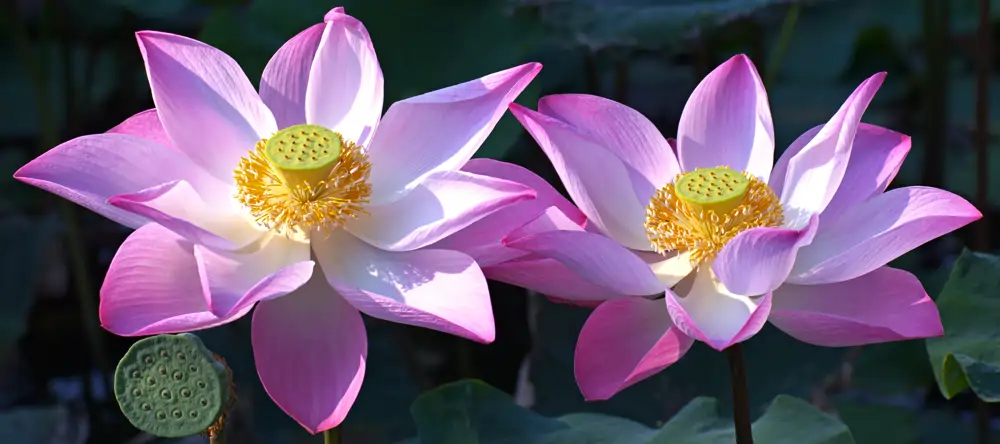
The third is the sacred lotus known as the red lotus plant (Nelumbo nucifera). They called it nakhb, the Arabs knew it as the “Arab bean” or the “Coptic broad bean,” which is of Indian origin. The flower is characterized by its red color, scent, and round leaves with a diameter of thirty centimeters rising above the water surface to a height of one meter.
A Roman-era child was wearing a hat made of lotus leaves on top of his head. Many of these hats were also found in the tombs of Hawara, which date back to the Greek and Greek eras. They resembled the Thessalian hat (from the region of Thessaly), as Theophrastus mentioned.
Religious and Spiritual Symbolism
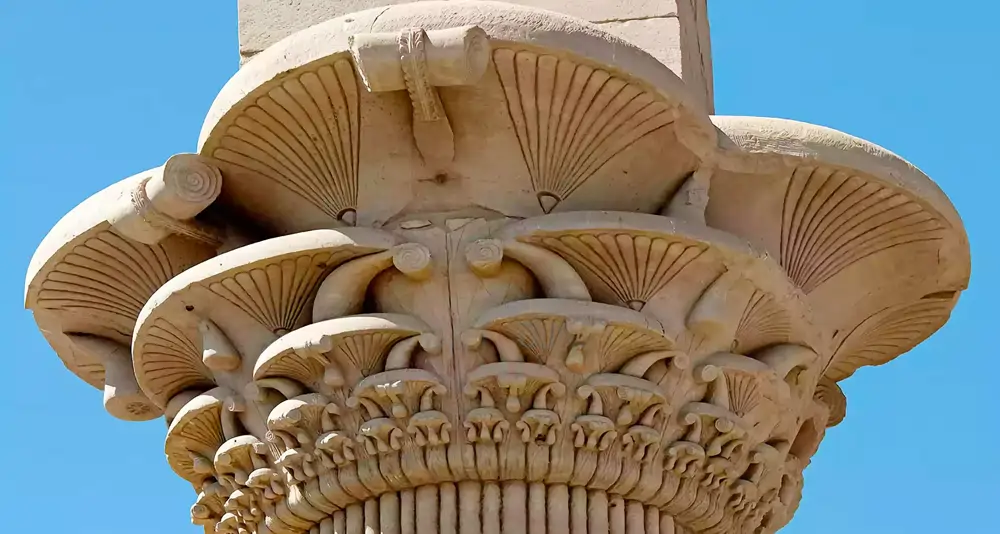
Lotus leaves were found in the headband of Nefertum and used to make a cradle for the infant Horus. They were found on the tops of most columns in temples and shrines, which were built in the shape of the pink lotus. Their presence increased in the late Roman era and then began to decline in the Christian era. The flowers are rarely seen in Egypt now but can still be found growing in the gardens of Alexandria, Cairo, and Ismailia. I wish the Ministry of Agriculture would take interest in replanting to save it from extinction.
The lotus was not just a plant that delighted the ancient Egyptians with the beauty of its appearance, refreshed them with its pleasant smell and intoxicating scent, or served as food. But it was associated with their faith as a symbol of the process of creation reflected on their lives and thoughts and reached the level and status that they likened to their kings (“The king is like Nefertum (the lotus flower) at the nose of Ra”).
When the Nile flooded the land of Egypt and it was haunted by stillness, ancient Egyptians imagined the eternal water from which the universe grew, and in the middle of it, the beautiful lotus flower comes out, receiving the sun in the morning when it blooms, then closes at sunset, then dives into the water at night.
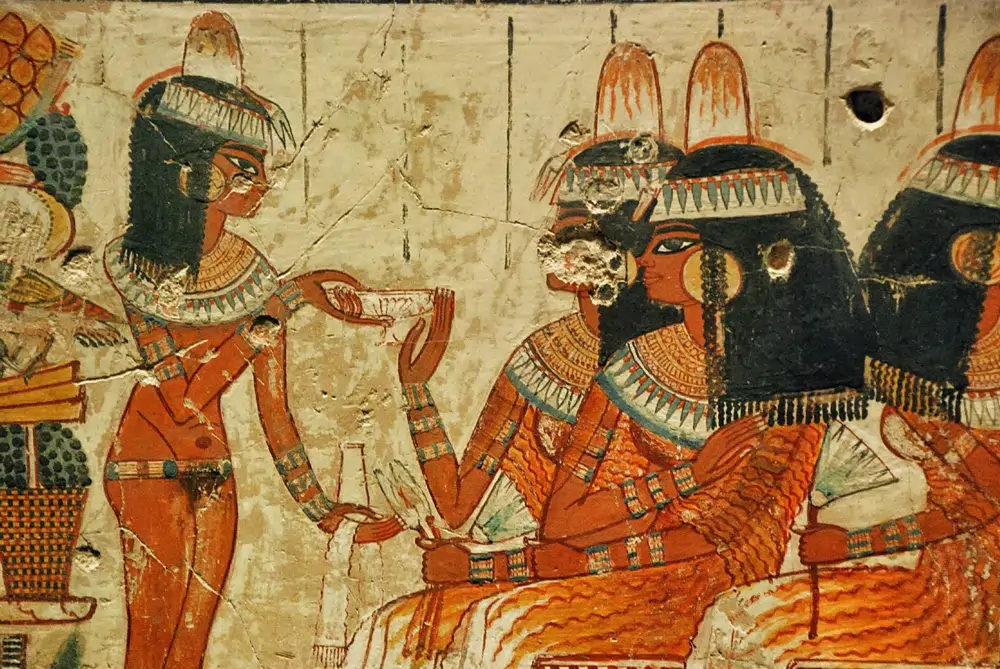
Being associated with the sun and its movement, ancient Egyptians linked it to the lord of the sun, Nefertum. The flower claims the water as its throne, and its seeds tear the atmosphere in which it grows. Lotus flowers became a symbol of the power of the mind (the manifestation of power) and represented Horus, the ruler of the sky in which the sun resided.
The Egyptians also believed that the baptized dead would be born again from the lotus flower, so the lotus flower was one of the most important offerings Egyptians made at temples to the dead in their tombs and was given as a gift of love to the living.
The Lotus in Ancient Egyptian Art
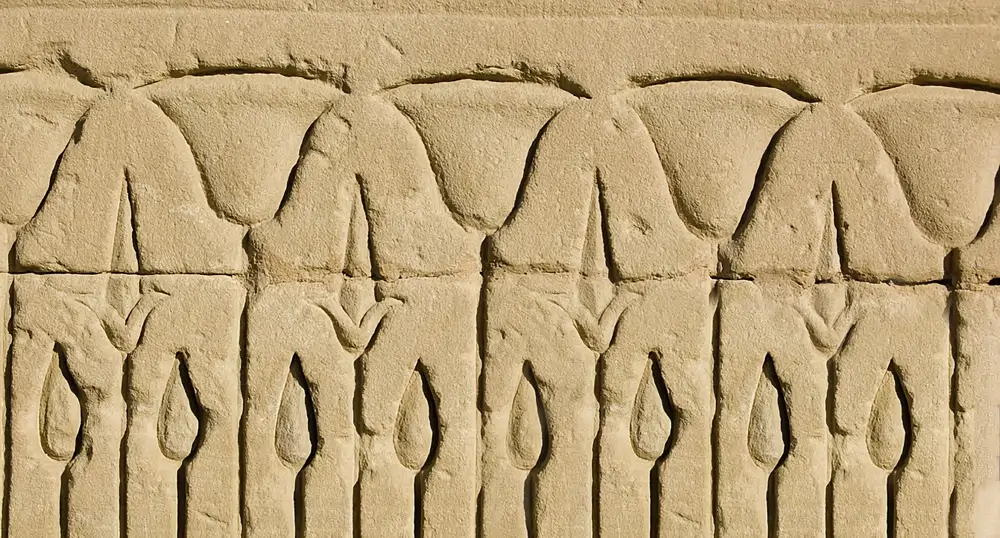
Lotus flower inscriptions invaded ancient Egyptian art and were used by the Egyptian artist in various forms, becoming one of the most famous shapes in decorations and drawings. It is very hard to find a monument in Egypt that is not decorated with it.
It was used in the cornices as it was filled with a conjugal and spiral anchoring and with a reversed position. The natural shape of the flower was also used, with four petals topped by a white or blue crown (often surrounded by stylized stamens and pistils), painted in its horizontal and side view in multiple repetitions.
Egyptologist Petrie says that the world owes its decorations to the Egyptians, who created the first civilization in the land.
Cultural Influence of Lotus Flowers
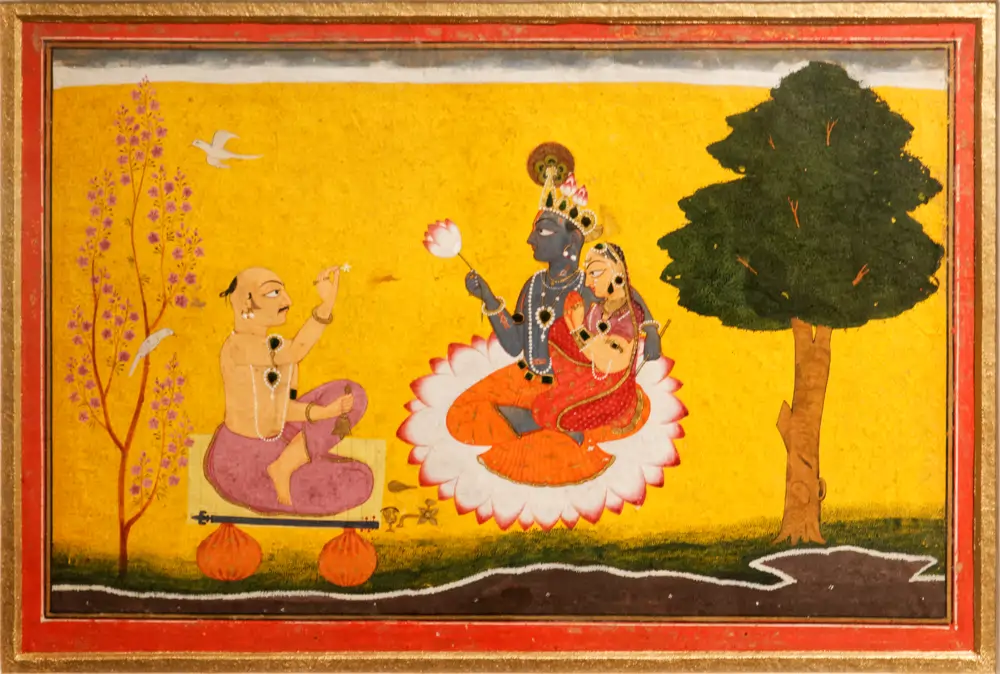
Egyptian symbolism spread to most ancient civilizations, especially Hinduism and Buddhism. The Egyptian creation story and its symbols of fertility, life, immortality, and purity became part of their beliefs.
The lotus flower remains a symbol of comfort, health, beauty, magic, love, and optimism in traditions and legends.
In China, they believe there is a sacred Lotus Lake in the sky, and every soul has a lotus flower in the lake. Some rural communities still burn incense to the soul of the lotus to prevent harm from evil spirits.
In one Buddhist school, the lotus flower plays an important role as a woman who unites with thunder, which plays the role of a man.
In Japan, whoever eats a lotus flower or its stems acquires physical strength.
Many Arab writers and herbalists wrote of this flower, which they knew as the “nilofar,” and listed its therapeutic benefits in the treatment of cough, vitiligo, pleurisy, lung pain, alopecia, ulcers, palpitations, leprosy, and bleeding.
In psychology, they use the phrase “eating the lotus” to describe a person who has lost their memory or someone who builds castles in the sky. This expression is derived from Greek myths about a people in Libya whose food consisted of the fruits and buds of the lotus, and everyone who eats them forgets their family, homeland, and friends.
Tennyson wrote of this myth in his poem “The Lotos-Eaters,” and Homer, author of the Iliad, also spoke of them.
Names like Sawsan and Susan are still used today. We say about the beautiful person “sharbat” (originally “sarbāt,” like the beautiful lord Nefertum—the beautiful lord who wears the blue lotus flower on his head, sarbāt).
Abdul Moneim Abdul Azim
Luxor – Egypt